1
Free the existing comb
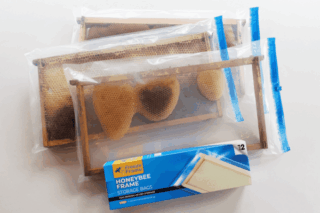
Using a hive tool or knife, carefully separate the comb from the old frame. Support it from underneath as you work around the edges.
Handle gently to limit damage to the comb.

QuickFrame · Migration guide
A clear sequence to follow, with preparation and common questions close at hand.
Have an assembled QuickFrame, your hive tool or knife, rubber bands, and protective equipment ready. Assess the condition and health history of the comb and colony first.
1
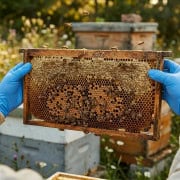
Using a hive tool or knife, carefully separate the comb from the old frame. Support it from underneath as you work around the edges.
Handle gently to limit damage to the comb.
2
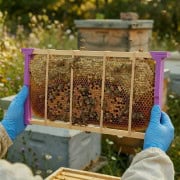
Place the comb inside an assembled QuickFrame of the appropriate size. Position it without forcing or crushing it.
A small gap is preferable to a forced fit.
3
Wrap rubber bands vertically around the frame to support the comb. The existing QuickFrame method uses three or four bands, adjusted to the frame and comb.
Check that the comb is supported before returning it to the hive.
4
Return the supported frame to the hive so the bees can attach the comb. At subsequent inspections, check attachment and the condition of the temporary supports.
Judge readiness by secure attachment, rather than a fixed number of days.
Migration lets you retain suitable drawn comb while replacing its frame. It can reduce the amount of comb the colony needs to rebuild, without requiring you to replace every frame at once.
Temporary support holds the comb while it becomes attached. Check the fit and supports before returning the frame, handle it gently, and inspect its attachment as the colony works. Do not assume loose comb cannot shift.
Brood comb requires especially careful handling. Support it while cutting and moving, minimize disturbance, and seek help from an experienced beekeeper if you have not handled loose brood comb before.
Assess whether the remaining comb can be supported securely. Do not force badly damaged or unstable comb into the frame. The appropriate next step depends on its condition and whether it contains brood.
They provide temporary support without requiring permanent fasteners through the comb. Inspect them as attachment develops; do not rely on every band being removed by the bees on a set schedule.
Only reuse comb whose health and history you can assess. If disease is suspected or the cause of colony loss is unclear, get advice from your apiary inspector or Extension service before moving comb or equipment to another colony.
Small gaps can be filled as the bees attach the comb. Support the comb without crushing it. Large gaps or a poor fit need a case-by-case assessment; avoid relying on a universal gap measurement.
Base the decision on the colony’s condition and capacity to care for the comb. A weak colony may need attention before a transfer. Ask an experienced beekeeper to assess the situation if you are unsure.
Honey-filled comb is heavier and can be fragile when freed from its frame. Allow for possible leakage and assess whether it can be handled and supported safely. Do not use a fixed honey-to-empty-comb ratio as a rule.
Start with a manageable amount and check the results before doing more. The right number depends on your experience, colony strength, season, and the condition of the comb.
It varies with the colony and conditions. Check that the comb is securely attached before treating it as an established frame; the calendar alone is not a reliable test.
One kit contains the parts to assemble 10 complete frames. Choose MEDIUM or DEEP to match your boxes.